Back to Blog
AI-Based Visual Quality Control Fails Quietly- Until It Forces Recalls and Manual Re-Inspection

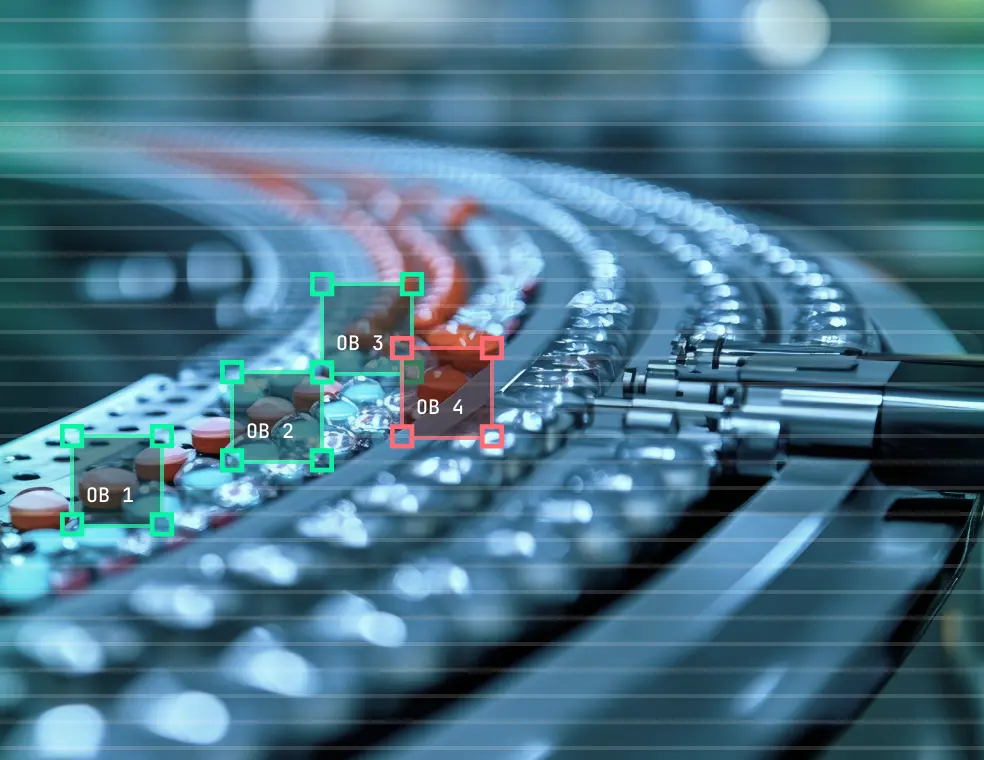
Why computer vision inspection models drift on the factory floor and across production lines, and how to make them diagnosable so teams can contain fast and fix surgically.
On a production line, while using AI-based visual quality control (QC), you rarely know when a computer vision model is wrong. Without real-time ground-truth labels, drift builds quietly while production continues.
Then a quality escape surfaces, a customer complaint, audit, or yield excursion, and everyone asks the same question: how big is the blast radius? Which lots, stations, or shifts? Since when?
If you can’t answer “since when,” you default to broad containment: widen the quarantine, re-inspect, add manual review. Scrap rises, throughput falls, and trust in automation erodes.
That is the moment of truth in AI-based industrial vision QC- you discover the error only after the damage is done.
Silent failure is structural because factories do not produce ground-truth labels in real time. You do not get immediate confirmation that a decision was correct. You get feedback later, and it is usually expensive feedback.
Meanwhile, drift is normal factory physics. Lighting angles shift after maintenance. Lenses haze. Fixtures wear. Vibration changes alignment. Operators adjust placement. Suppliers change surface texture or finish. Contamination comes and goes. New SKUs arrive. Line changeovers introduce subtle variation.
Most of this does not look like a crash. It looks like gradual erosion:
When the model cannot explain itself, teams cannot triage. “Confidence went down” does not tell a quality engineer what to do at 2 a.m. Was it glare, blur, a new texture, a tooling shift, or a labeling policy mismatch? Without a concrete reason, the rational move is broad containment plus manual review.
There is a second kicker. Defects are rare by design. So the next failure mode often arrives before you have ever labeled enough examples of it to recognize it early. And the evidence you need is usually scattered across edge PCs, plants, versions, and partial logs.
The common responses are rational, and still insufficient.
“Collect more data.”
This sounds right until you realize you are collecting without a hypothesis. If you cannot localize what changed, where, and when, you can gather volume and still miss the exact drift slice that caused the escape. More data is not more control.
“Add more QA layers.”
Manual review gates can reduce escapes, but they add cost and slow the line. Worse, they create a confused operating model: who is accountable, the model or the human? Over time you end up paying for both, and trusting neither.
“Extend the pilot.”
Long pilots do not automatically create trust. They often normalize shadow mode. Human overrides become routine, misclassifications stop being treated as fixable defects in the system, and the organization learns to live with “automation that needs babysitting.”
Computer vision models in manufacturing should be treated like diagnosable production systems, not one-time deployments.
That requires explainability with an operational job: incident response and containment.
When something goes wrong, teams need to answer two questions quickly: What changed? When did it change?
Explainability helps by making a CV model’s behavior legible at the point of failure. Not as a report, and not as a compliance artifact. As a way to connect an escape or yield event to specific visual evidence, conditions, and assumptions so teams can choose the smallest corrective action.
The goal is targeted repair, not “start over” retraining:
When you treat explainability as a control loop, a few concrete workflows emerge:
Example 1: Supplier lot change leads to silent escapes
Example 2: Lens haze creates “healthy” dashboards and unhealthy output
This is not about perfect models. It is about never being blind.
Production lines never stand still: conditions shift by the hour, operators change, equipment wears, lighting drifts, and new SKUs or packaging arrive often. If your visual QC system cannot quickly answer what changed and when, you will eventually pay for it in escapes, over-containment, and a second inspection process nobody trusts.
One way to begin: log your model failures like production incidents. Keep a “failure book” with what happened (what/where/when) plus semantic meaning and explainability evidence that pinpoints the root cause of each failure and the reason behind each decision. Over time, this becomes operational memory you can act on, so you can fix issues without broad quarantine.
If a quality issue shows up tomorrow, would you know what changed and when?